


Making Recycled Materials Appealing: The Air Purifier Design Recognized by the iF Design Award
July 22, 2026
“It may be eco-friendly, but it’s not necessarily appealing…” Such kind of a common perception of recycled material is now starting to change. Sharp’s new challenge was to make the front panel — the “face” — of an air purifier out of recycled plastic. Here we introduce the story behind the beautiful recycled material which went on to win the iF Design Award, one of the world’s most prestigious design awards.
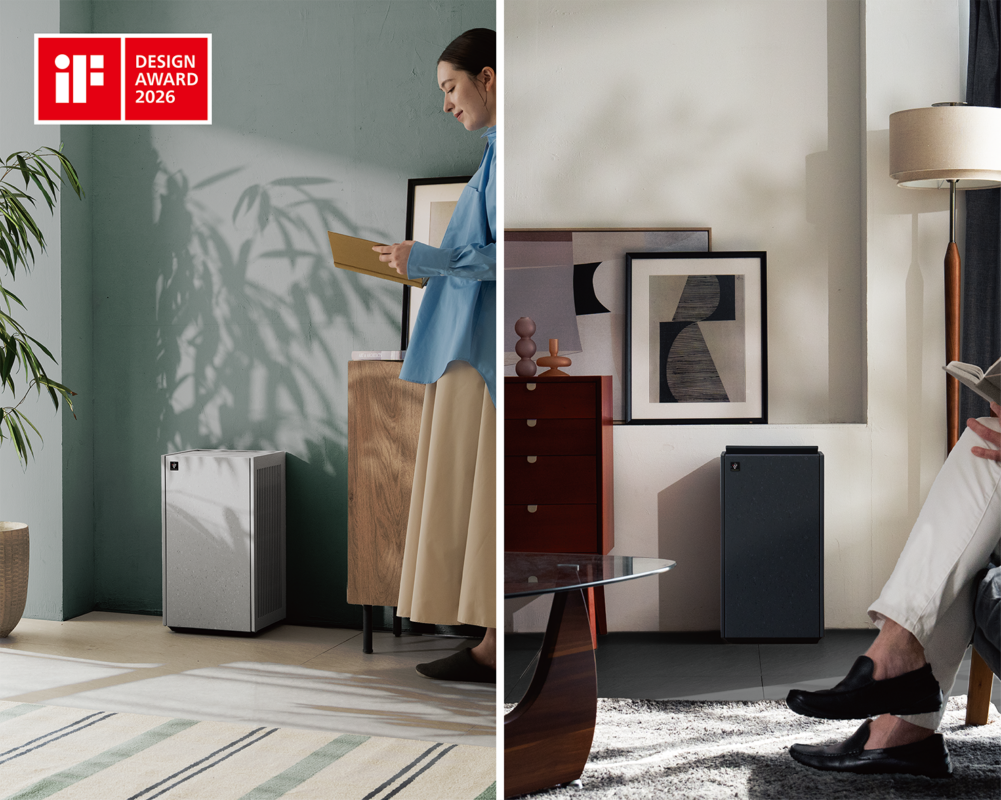
Because color variation depending on production lots and black specks are prone to occur in recycled plastic, adopting it for front panels — where appearance quality is required — had been considered difficult. Such possibility conventionally had not been pursued seriously.
Despite the challenge, Sharp overcame the difficulty and adopted recycled plastic for the front panel in air purifiers to be launched in Thailand, Indonesia, the Philippines, Singapore, Vietnam, India, and Taiwan.
You may assume that using recycled material for home appliances is simple. However, using recycled material for a product’s exterior parts requires more than substituting recycled material for virgin material; strength, durability, and even appearance quality all have to be cleared.
Sharp, together with Kansai Recycling Systems Co., Ltd., developed Closed Material Recycle (CMR) technology, repeatedly reusing plastic recovered from used home appliances as parts for new home appliances. Since its practical use in fiscal 2001, cumulative use of this recycled plastic (CMR material) up to 2025 totals up to 22,000 tons.
And this time the new challenge to expand CMR material’s scope to the front panels of air purifiers for overseas markets was made. Until now, CMR material had mainly been used in internal components; this expands its use to the front panel — the product’s “face.”
The challenge is to achieve environmental care while also meeting design standards.
■ Product Overview
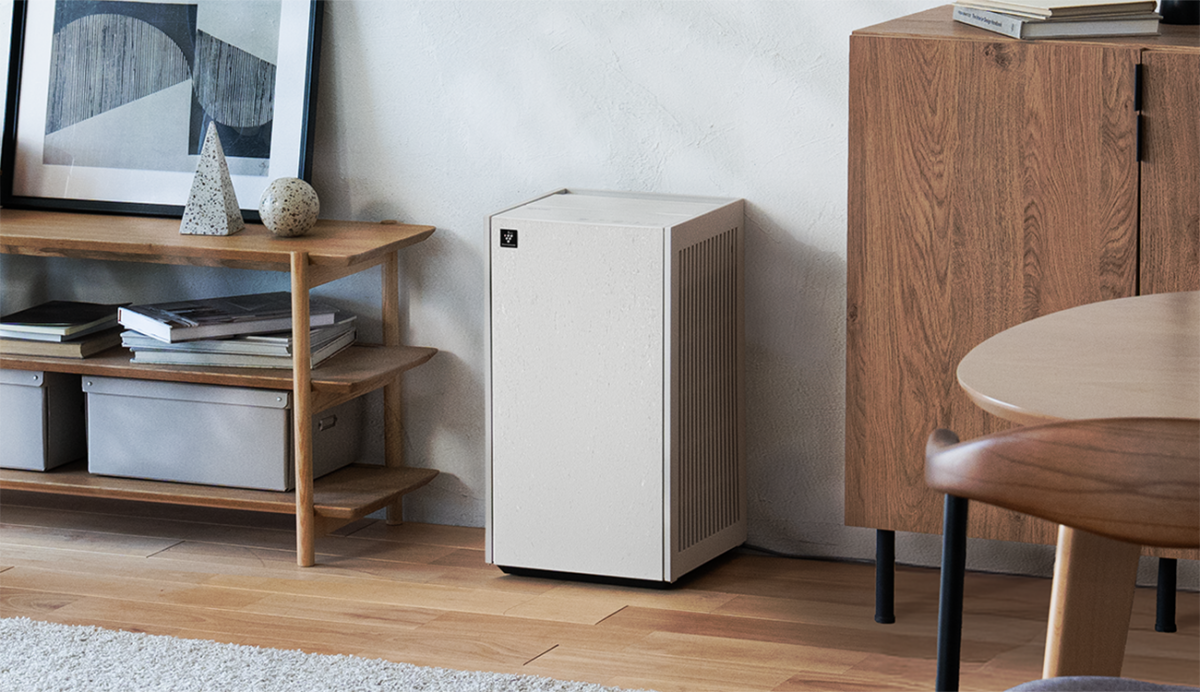
Product name: Plasmacluster air purifier
Launch regions: Thailand, Indonesia, the Philippines, Singapore, Vietnam, India, Taiwan
Launch timing: To be launched sequentially from September 2026 (planned)
■ What Is CMR? — A Mechanism for Circulating Resources from Appliance to Appliance
CMR, which Sharp has pursued for many years, is a technology that repeatedly reuses plastic recovered from used home appliances as material for new home appliances. It is an effort aimed at achieving both resource circulation and product quality, while also helping curb the use of fossil resources and CO2 emissions.
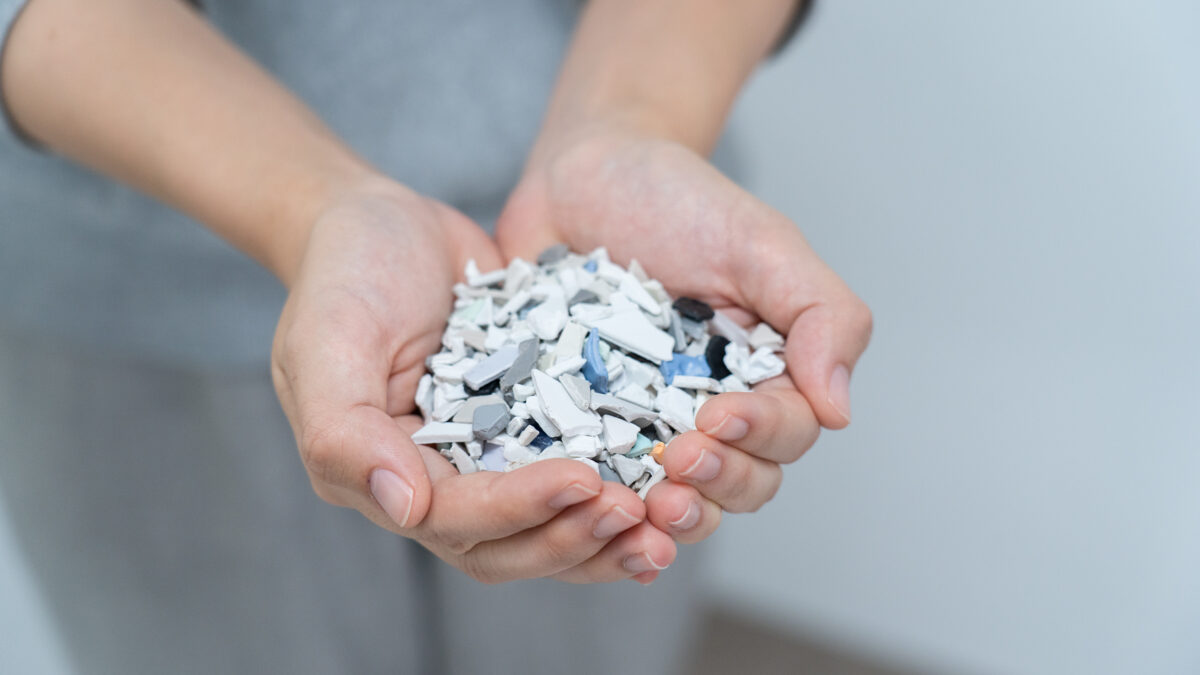
Parts recovered from used home appliances go through processes such as crushing, washing, processing, and evaluation/analysis before being reborn as product parts once again. Through this series of processes, Sharp ensures the quality needed for reuse in home appliances, which are durable consumer goods.


■ A Challenge for “Visible Parts” — The Difficulties of Recycled Material
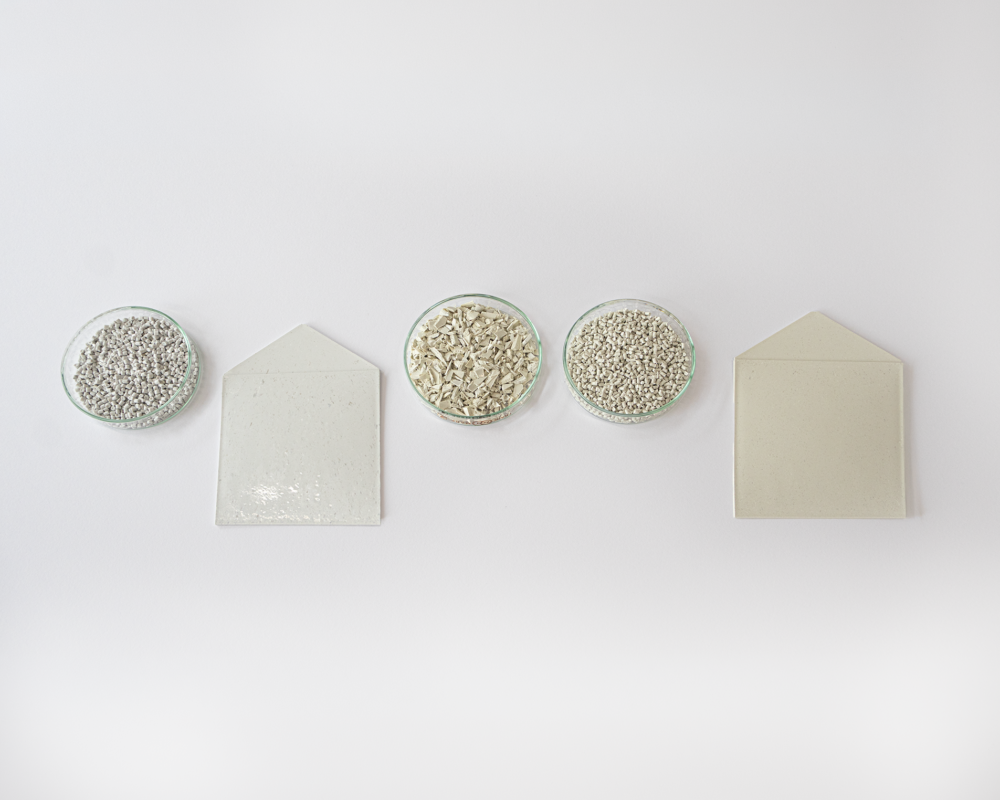
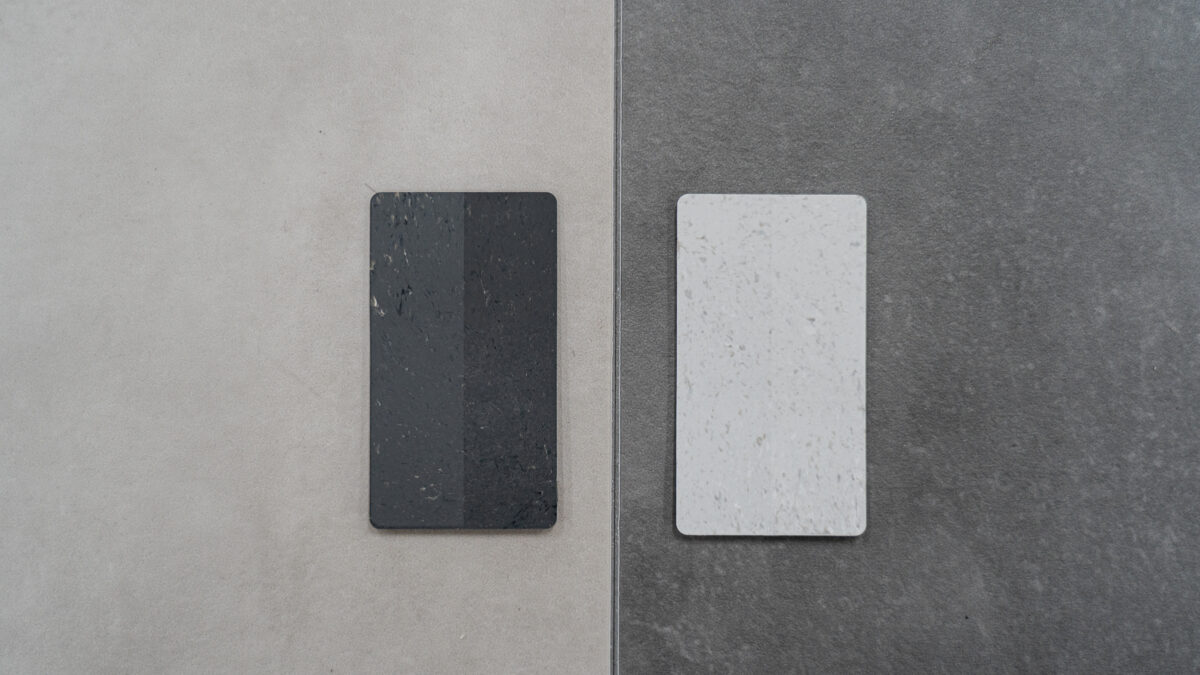
Because recycled material uses plastic recovered from used products as its raw material, it faces appearance-quality challenges such as color variation between production lots and black specks that can be mixed in during manufacturing.
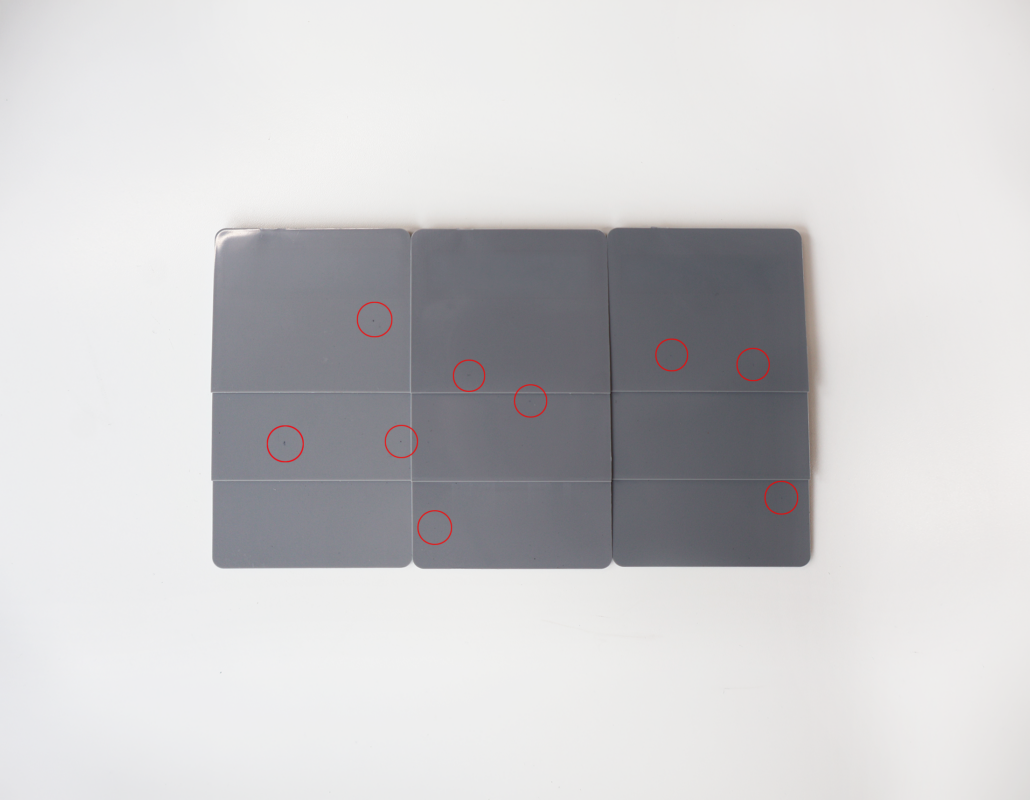
Color variation and black specks are visible, posing a challenge for product appearance
For this reason, adoption had conventionally centered on internal parts less visible in appearance, such as power supply boxes and internal covers — meaning that using recycled material in “visible parts” had been a high hurdle both technically and in terms of design.
So why take on the air purifier’s “front panel” this time? That is the key of this initiative.
■ How to Make the Most of the Material — A Design Concept That Makes It Work
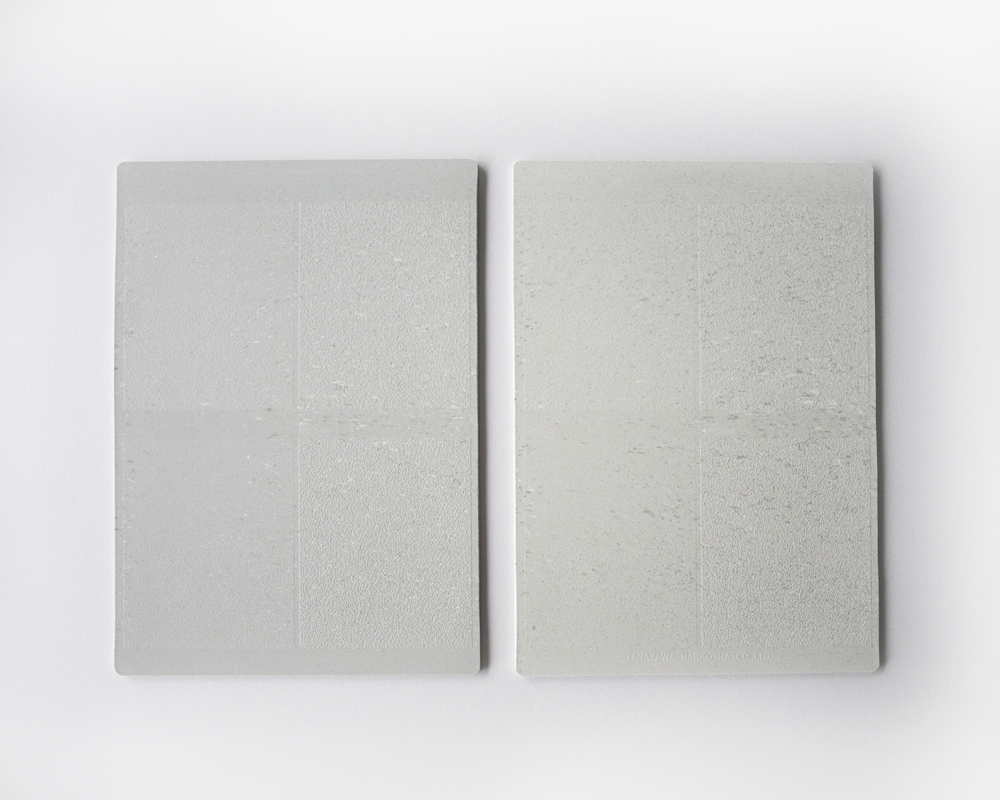
In this development, Sharp adopted CMR material for the front panel while combining it with a decorative treatment that enhances its design quality.
Rather than concealing the color variation and black specks unique to recycled material, the aim was to make the material work as design while drawing on its inherent characteristics. This is the key point of this initiative.
■ The Technical Foundation — Securing Performance and Re-Recyclability
In this initiative, achieving both design quality and CMR material’s performance and concept together was the most critical challenge.
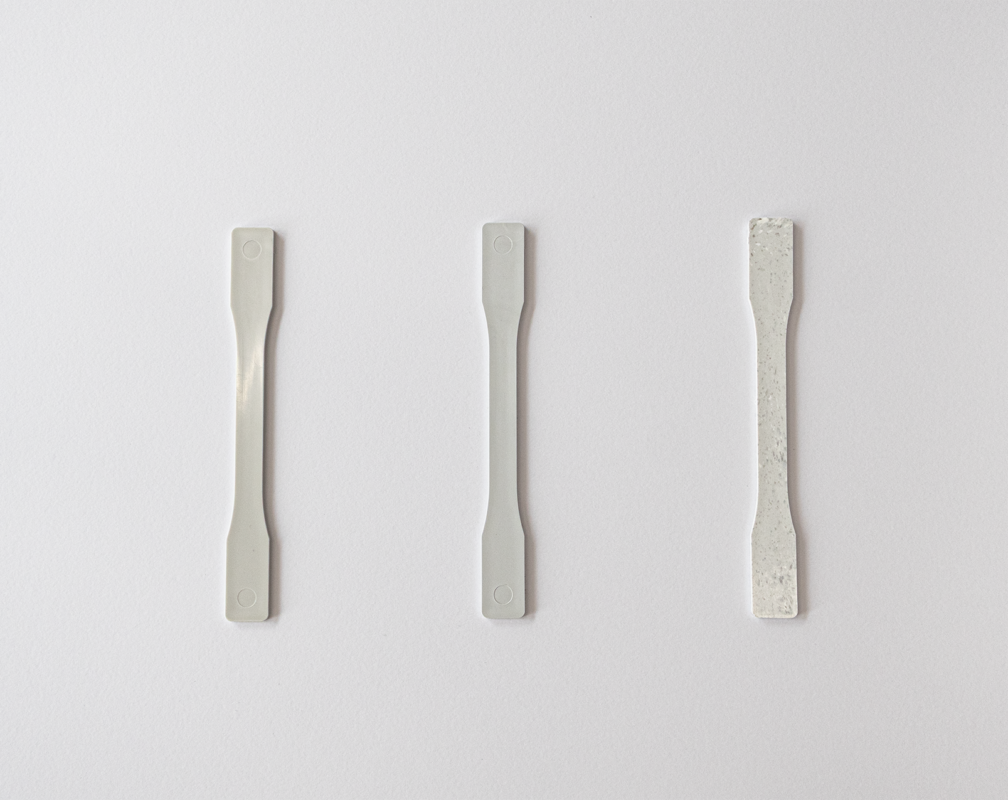
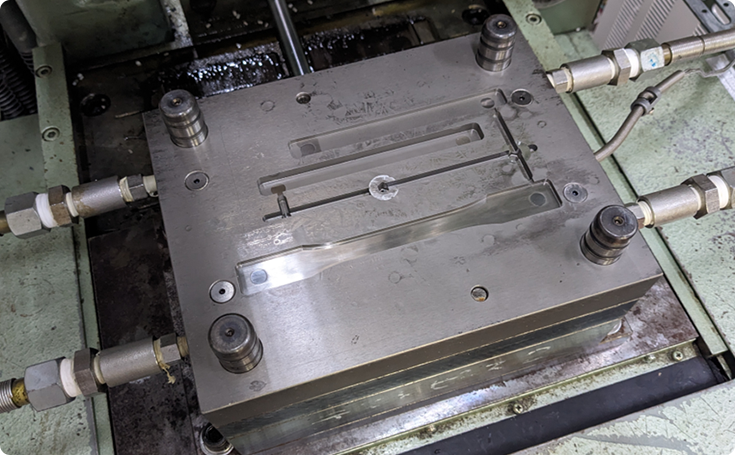
Specifically, the highly designed, stone-textured pattern adopted this time emerges as CMR material, mixed and melted together with additives that impart design quality, flows through the mold during injection molding. The pattern is created by making use of differences in how each material flows. Producing the intended pattern through injection molding requires advanced technique, but by drawing on know-how built up by its engineering divisions, Sharp established conditions that allow the pattern to be reproduced stably.
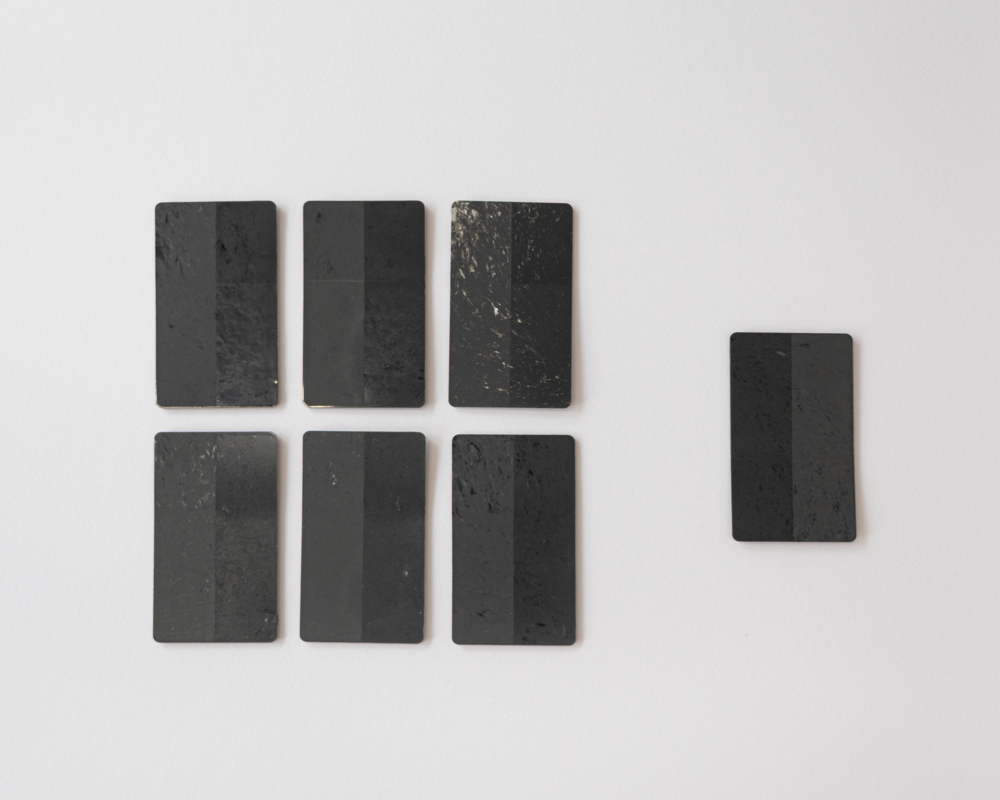
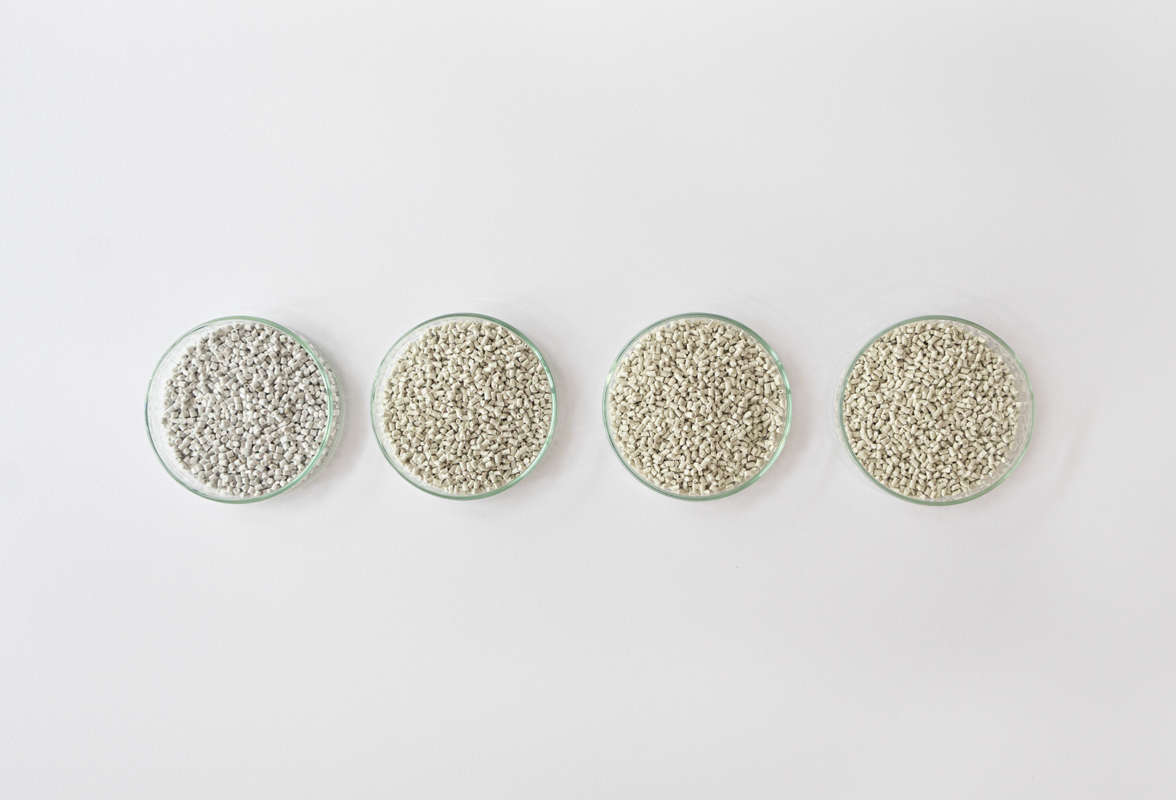
At the same time, the additives that impart design quality can affect CMR material’s performance and its repeated recyclability. For this reason, Sharp selected additives and designed their formulation while accounting for CMR material’s composition, flowability, and color-tone characteristics, confirming performance using small-scale lab test equipment. Furthermore, in addition to securing the strength and durability required of durable consumer goods, Sharp carried out material development on the premise that the material could be recycled repeatedly even after use.
For example, because recycled material’s flowability and color differ depending on the collected raw material, it was necessary to check, one by one, how blending in additives would affect the molded appearance and performance. By accumulating this kind of verification, Sharp identified optimal material conditions that achieve both design quality and performance.
In addition, through accelerated-deterioration testing, Sharp experimentally produced front panels equivalent to used products and verified their re-recyclability, establishing formulation technology that enables repeated recycling while securing the performance required of durable consumer goods.
Words from the Engineering Team
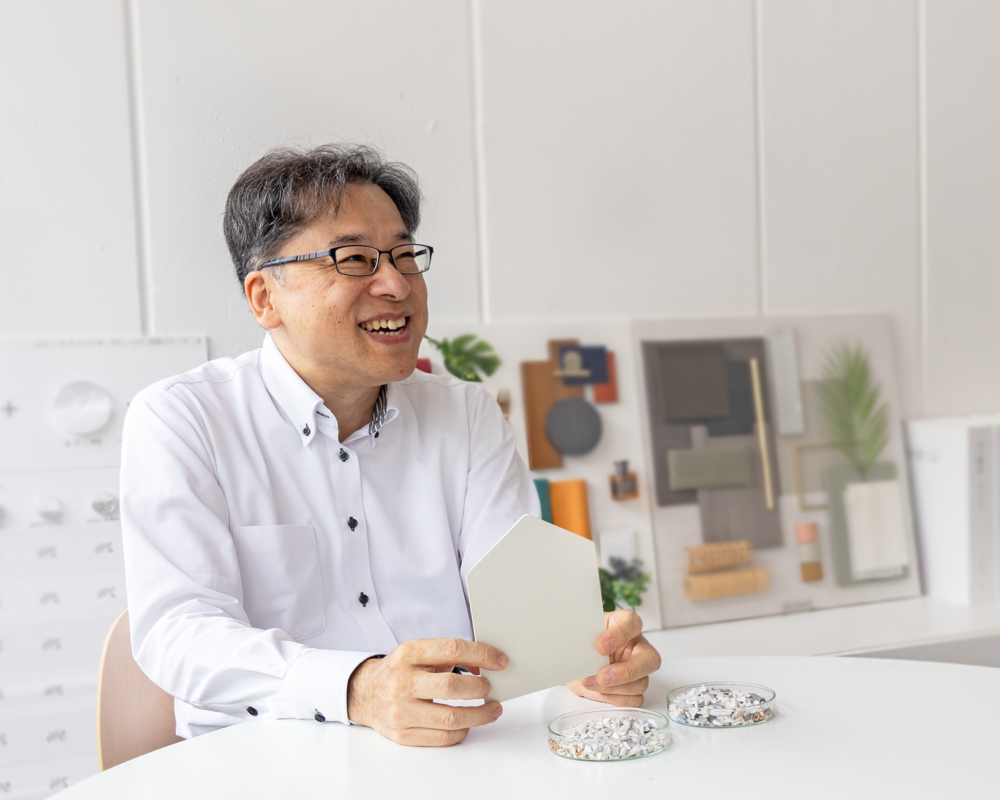
It was necessary to achieve not just visual expression but also durability, physical properties, and re-recyclability all together. Repeated examination and evaluation of the material laid the foundation for adopting it in this front panel.
Even within the same recycled material, flowability and color development differ by material. We explored the conditions needed to make it viable as a product while checking, one by one, how these differences affect appearance and strength.
Recycled material isn’t something to be used just once. This time, we carried out material design and evaluation with an eye toward being able to recycle it again after use.
■ Stone-Textured Design — The Expression Adopted in the Actual Product
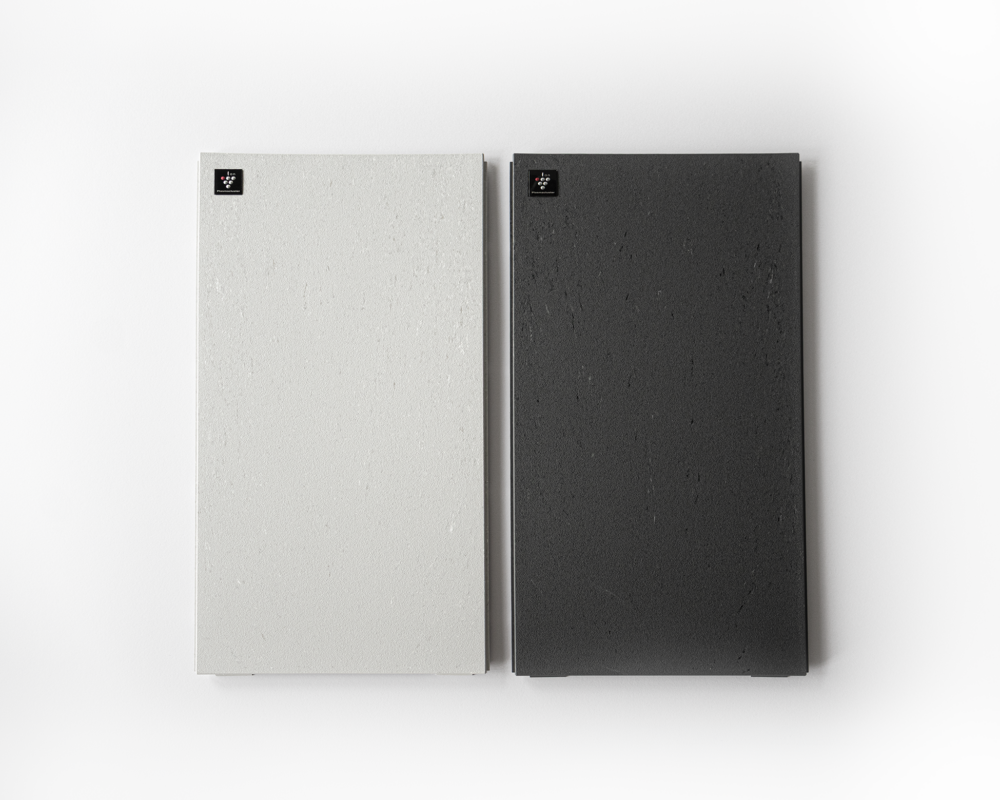
A key feature of this initiative is reframing the material’s variation not as a “constraint” but as “individuality.” By making the most of the incidental patterns unique to recycled material, Sharp achieved product design value that goes beyond mere environmental consideration. Its development policy set out to turn “color variation” and “black specks” into added value, aiming to use the expression unique to recycled material as a design element. Adopting it for the front panel results in a design that visually conveys environmental consideration.
Words from the Design Team
We aimed for a design that feels individual while still blending into the space, treating the material’s variation as its individuality.
Rather than hiding the shortcomings of recycled material, we reframed them as the material’s natural expression. The natural expression that emerges during injection molding means no two units are alike. We believe that is new value born precisely because the material went through the recycling process.
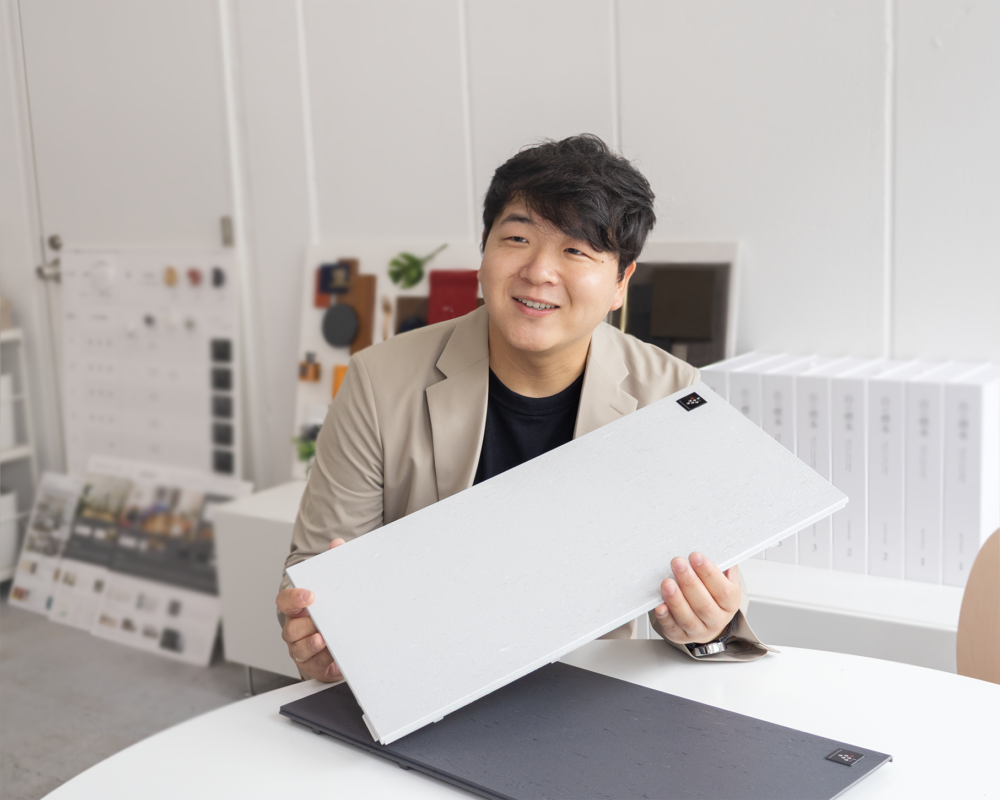
Looking again at the trend of sustainability, we felt that whether something can be reborn the same way after use is what truly connects to genuine environmental friendliness.
Until now, there had been almost no recycled material for exterior parts capable of being re-recycled, and we could not confirm any case of mass-producing decorated recycled material in a form that could once again be horizontally recycled. That is precisely why we wanted to add design quality to recycled material while still aiming for a design that can circulate again at the same quality. That idea was the starting point of this initiative.
This design was realized not only through our design team but through the accumulated knowledge of the engineering divisions that support the material, the production sites, and many other people involved. It is because they overcame the difficulty of handling recycled material’s characteristics that we were able to give shape, as a product, to the concept of ” making recycled materials appealing.”
■ Toward International Recognition — Winning the “2026 iF Design Award”
This product won the 2026 iF Design Award, being recognized for adopting CMR material across the entire front panel, as well as for achieving both design quality through its stone-textured decoration and environmental consideration. The iF Design Award was established in 1953, and is one of the world’s prestigious design awards, conducting a comprehensive evaluation that includes functionality and sustainability.
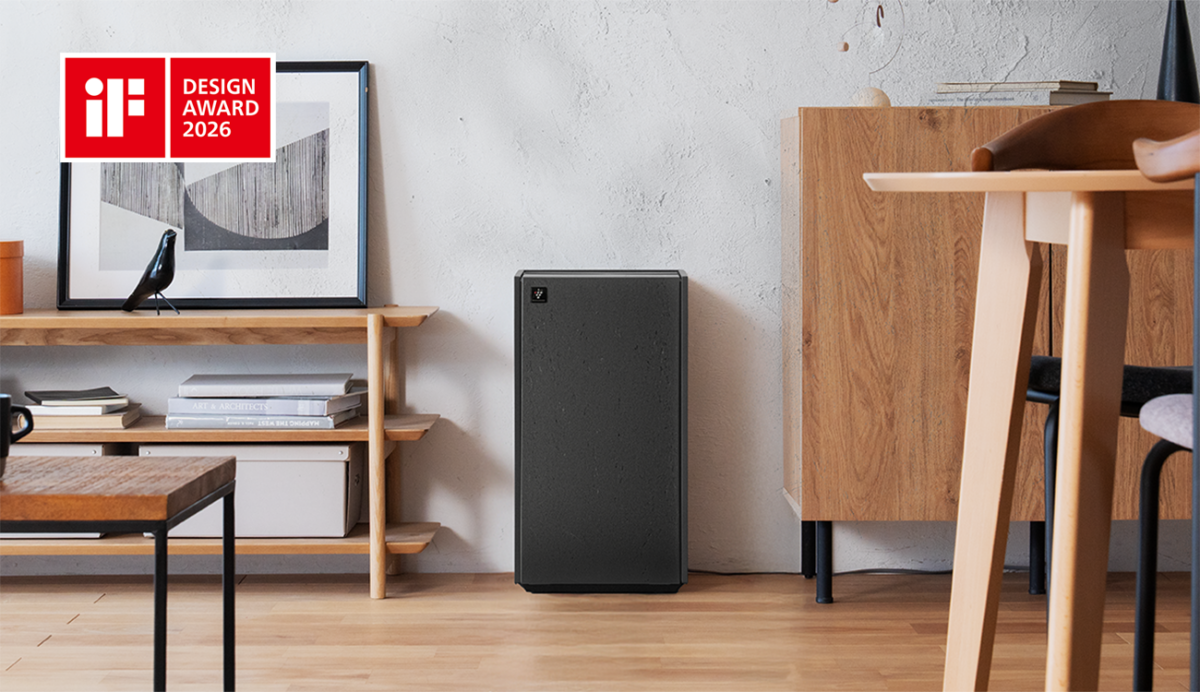
iF Design – SHARP Plasmacluster air purifier
This initiative is distinguished not merely by its use of recycled material, but by achieving both “a design that anticipates the ability to be recycled repeatedly” and “improved exterior design.” The insights gained through this commercialization will also lead to further use of CMR material going forward.
Sharp is also considering new decorative expressions for future products that make the most of characteristics unique to CMR material. Because stably drawing out the material’s characteristics requires fine-tuning of materials and molding conditions, technical study is ongoing.
Going forward, Sharp aims to expand CMR not only to the major home appliances subject to the Home Appliance Recycling Law*1 — refrigerators, washing machines, air conditioners, and TVs — but to all of its products. By expanding its application from “parts that are hard to see” to “parts that are visible,” as in this case, Sharp will continue manufacturing that achieves both resource circulation and product value.
Rather than ending the use of recycled material with just “for the sake of the environment,” Sharp is working toward design people want to use. Development continues toward that next cycle. Sharp will continue to contribute to a sustainable society through new manufacturing that achieves both environmental performance and design.
*1 Japan’s Home Appliance Recycling Law requires consumers, retailers, and manufacturers to share responsibility for recycling used home appliances. Retailers collect discarded products, manufacturers recycle them, and consumers pay the necessary recycling and transportation fees.
<Related Sites>
■Release: Five Sharp Entries Win the “2026 iF Design Award”
■Sharp Blog:

■Sharp’s Sustainability (Japanese site)
Plastic’s Closed Material Recycle Technology — From Appliance to Appliance, Reused Repeatedly Again and Again
・What Is Plastic’s Closed Material Recycle Technology
・Advancing the Recycling of Waste Plastic into Resources through Improved Disassembly and Collection Technology
・Efforts in Quality Control: Removing Foreign Matter and Determining Additive Formulations
Related articles
-
 A doctor car installed with Plasmacluster ion generator is making its rounds in Kenya
November 8, 2016
A doctor car installed with Plasmacluster ion generator is making its rounds in Kenya
November 8, 2016
-
 Exhibiting at “CEATEC 2024” – Introducing Sharp’s Efforts to Contribute to ESG and Advanced Technologies like AI –
October 16, 2024
Exhibiting at “CEATEC 2024” – Introducing Sharp’s Efforts to Contribute to ESG and Advanced Technologies like AI –
October 16, 2024
-
 Sharp Philippines Provides Better Solutions for a Better Life
July 18, 2019
Sharp Philippines Provides Better Solutions for a Better Life
July 18, 2019
-
 Sharp’s Health and Environment Systems Business presentation held at Shanghai, China
March 31, 2017
Sharp’s Health and Environment Systems Business presentation held at Shanghai, China
March 31, 2017
-
 Sharp Sponsors the Major Official E-sports Tournament “VALORANT Champions Tour Pacific Stage 2 Finals Tokyo”, Supporting the Event with Plasmacluster Air Purifiers
October 20, 2025
Sharp Sponsors the Major Official E-sports Tournament “VALORANT Champions Tour Pacific Stage 2 Finals Tokyo”, Supporting the Event with Plasmacluster Air Purifiers
October 20, 2025
-
 Two “original” factors in the new corporate motto “Be Original.”
January 5, 2017
Two “original” factors in the new corporate motto “Be Original.”
January 5, 2017
-
 Discovering the roots of the ASEAN ‘Air Purifier with Mosquito Catcher’ through a teleconference with Malaysia!
August 29, 2016
Discovering the roots of the ASEAN ‘Air Purifier with Mosquito Catcher’ through a teleconference with Malaysia!
August 29, 2016